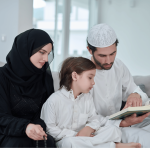
In this reflection I explain how to grow family bonds and strong ties by using the positive outcomes of Ramadhan, the discipline we developed, eating together, praying together. It demonstrates why Ramadhan is Mubarak, bears fruit, is enriching and empowering.
Adnan a teenager is in college, his sister Jamila is year ten student, and Fatimah is in year six, mum and dad work. This Ramadhan the family decided to have Suhoor and Iftar together. It was first time for a long time that the family dined together twice a day. Often dad lead the Fajr and maghrib prayers in jamaat. So, the magic of Ramadhan blessed the family. They began to appreciate each other more, Adnan, Jamila and Fatimah were no longer hiding in bedrooms but spending time in the lounge or the kitchen. They invited relatives and friends to iftar and sometimes went to the relatives’ homes for Iftar. Often the family prayed Isha and Tarawih in the local masjid.
Three outstanding qualities of a Muslim family
Surat Al-Layl talks about the variations in our families and individuals. How each one has a different interest, portfolio of enterprises and projects. The Lord seems to love this diversity in His creation. But somehow humans fail to recognise the attractiveness in diversity. So, Allah tells us three kind of people he loves:
- Those who give generously
- The pious and God conscious
- Those who acknowledge beauty, they are open minded
How do we react to others? How do we relate with different people? Do we put up mental barriers? Or do we make bridges? The above key points show the nature of relationship building. They teach that to build good relations with fellow humans we must share our lives, food, prayers likes and dislikes. Secondly, know the creator and Lord, and thirdly, value the beauty around him in God’s creation.
How good are your interactions? How strong are the relationships?
Healthy relationships and family unity depends on individuals’ self-confidence and self-respect, and loyalty to each other. The themes of unity and strong social relationships run through Islamic teachings. The Messenger of God (peace be upon him) encouraged people to eat together and share meals with family, friends and neighbours.
The Qur’an describes the disciples’ community spirit as follows, “Although they are needy themselves, they prefer others over themselves. And whoever can protect himself from being greedy is successful.” So, learn to restrain yourselves, limit your needs and even put aside your freedom of choice for the good of the family. Now that’s a high standard of self-control and discipline!
Adnan and Jamila had their own ‘comfort zones’, where their needs were fulfilled. They did what they liked, when mum called, she was often ignored, when father invited for meal, it was declined. Self-interest and friends took priority. They were unaware that the Messenger stressed parents’ respect and care, once he said, “a person who has one or both parents but doesn’t care for them will go to hell, Allah will deprive him of his divine kindness and make him apostate.” (Tabarani) Parents are advised by the Messenger “value your children and teach them morals and manners.” (Ibn Majah)
Yet, the mother’s love, fathers concern, brother’s admiration and sister’s love is your family’s greatest social capital. These connections are the ingredients of a strong family: mutual trust, understanding, closely negotiated ties of interdependency. This is the glue that holds the family together. The Messenger said “whoever strengthens family ties, I will bond with him and whoever breaks the family ties I will break my ties with him.” (Abu Dawud)
What Must my family do to grow strong together?
However, you need to do a lot more to build links with each other. Strengthening family ties demands a shared sense of belonging based on common goals, core moral and spiritual values, respect for differences and acceptance of shared rights and responsibilities. That’s where Ramadhan did amazing job! Now Adnan and Jamila began to appreciate the Messenger’s saying “the greatest sin is to disobey parents.” (Bukhari)
Happy family life can be achieved by empowering and supporting each other. We know one another well, yet when we disagree, we fail to negotiate peacefully, and fall out. Therefore, learn to mediate to avoid conflict. Speak regularly. We need more contact, less time alone in our bedrooms. This will reduce mutual ignorance and hostility; this will diminish fears and suspicions. Psychologists call this ‘contact theory’: This explains the effects that different kinds of interaction have on people’s attitudes towards others. The more contact people have with each other, the lesser the effects of stereotypes and prejudices. Cooking and eating together, going out together, visit relatives often are some useful strategies. We have the ingredients of forming a loving family. This was Ramadhan Mubarak. So, continue the legacy of this blessed month.
Eid mubarak
Post Views: 9,336